

Bad Credit Car Loans in Ontario: Can You Get One, and What Happens When You Apply?
Updated: Oct 8

Yes — bad credit does not automatically end the conversation. Carleton Place Ford arranges financing with both prime and non-prime lenders, on approved credit (O.A.C.).
What nobody can honestly tell you is whether your own application goes through. Approval depends on the application, income, credit, the vehicle and lender requirements, so this page explains what actually happens when you apply instead of promising you an outcome.
If you have been typing bad credit car loans into your phone late at night, you are not looking for a sales pitch.
What can a dealership honestly tell you about bad credit car loans?
Process, not outcome. We can tell you what a lender looks at, what documents to bring, what happens to the vehicle you still owe money on, and what Ontario law gives you when you sign.
We cannot tell you your odds, a rate, a payment or a term, and we will not pretend otherwise.
What you will find on this page:
What "bad credit" means to a lender.
What a lender looks at besides your score.
What applying does to your credit report, and the timing that matters.
What happens to a vehicle you still owe money on.
What Ontario law gives you, and what it does not.
What you will not find:
A rate, a payment, a term or a dollar figure.
A promise of approval, or your odds of getting one.
A credit score you "need" to reach.
Apply for financing whenever you are ready, on approved credit (O.A.C.). There is no clock running on this page.
Can you get a car loan with bad credit in Ontario?
Often, yes, but it is decided one application at a time, not by a category. The Financial Consumer Agency of Canada describes two routes to car financing: through the dealership, where the dealer arranges the loan through a manufacturer's financing division, a bank, a credit union or an independent finance company, or directly from your own bank or credit union.
At Carleton Place Ford we work with a range of lenders, including both prime and non-prime lenders, on approved credit (O.A.C.).
We never promise an outcome, and a page that does should worry you.
What credit score do you need for a car loan?
There is no single number, and that is a fact rather than a dodge. The Financial Consumer Agency of Canada says a credit score is a three-digit number that comes from your credit report, that it shows how likely you are to repay money you borrow, and that scores usually range from 300 to 900, with a higher score better.
Canada has two main credit bureaus, Equifax and TransUnion. Equifax's own consumer education says there are many different credit score models used today by lenders and other organizations, with differences in how the data on a report factors into the calculation.
So a page that tells you the number you need to reach is describing one model reading one file. We will not publish a threshold we cannot stand behind.
What will a lender see on your credit report?
Your history with credit, in a standard form. The Financial Consumer Agency of Canada describes a credit report as a summary of how you have used credit in the past, and lists what it holds: credit cards, loans, lines of credit and retail cards, non-sufficient funds payments or bad cheques, bankruptcy or court decisions related to your credit, and debts sent to collection agencies.
Checking your credit report or score won't affect your credit rating — that is the agency's own wording. Both reports are free online from Canada's two main credit bureaus.
On the score itself, the agency says Equifax is free in all provinces and territories, and TransUnion is free if you live in Quebec or Ontario. If you are reading this from Lanark County or the Ottawa Valley, that second one is free for you.
What does a lender look at besides your credit?
Income, stability and the vehicle itself. The Financial Consumer Agency of Canada says lenders generally require proof of regular income, a bank account and a permanent address, and that most lenders run a credit check when you apply for a personal loan.
It also says your credit report, credit score and debts may affect your loan options.
A car loan is a personal loan for the purchase of a car or other type of motor vehicle — the agency's own definition.
A secured personal loan uses an asset, such as your car, as collateral, and if payments stop the lender may take the asset from you.
The agency lists a down payment among the steps that reduce financial risk when buying a car. Whether you make one is your call and nobody else's.

Will applying for a car loan hurt your credit?
Applying puts a hard inquiry on your report, and the timing matters. The Financial Consumer Agency of Canada says hard inquiries, also called hard hits, are credit checks that appear on your credit report.
It also says that when you are shopping for a car loan, quotes from different lenders within a two-week period are treated by the credit bureaus as one inquiry.
Hard inquiries stay a while. The agency's own table gives three years at Equifax and six years at TransUnion.
A car loan is one of the accounts a credit report carries — the Financial Consumer Agency of Canada lists loans among the credit you use — and for each account the report records when you opened it, how much you owe, and whether you make your payments on time or miss them.
The same agency says paying your bills on time is the most important part of your credit score. It also says lenders want to see that you can manage more than one type of credit responsibly.
Those are its facts, stated flat. What they add up to on your own file is yours to read.
We work with a range of lenders, so your application has more than one place to go, on approved credit (O.A.C.).
We will not tell you how many points an inquiry costs, because no Canadian authority we could find publishes it. And we will not tell you that financing a vehicle with us fixes a credit file, because that is a claim about our own product.
And if you would rather know where you stand before anything is submitted, talk to us first.
What happens when you apply at Carleton Place Ford?
Bring a driver's licence and proof of income if requested; lender requirements vary. We work from there.
We work with a range of lenders, including both prime and non-prime lenders, on approved credit (O.A.C.), and approval depends on the application, income, credit, the vehicle and lender requirements.
Prime and non-prime means we arrange financing for strong credit and for bruised credit, on approved credit (O.A.C.).
Apply for financing before you come in if you would rather have that part behind you, on approved credit (O.A.C.).
What we will not do is tell you it is going to be fine. Some days the honest answer is to wait, and if that is what your situation says, we will say so.

Can someone co-sign a car loan with you?
Yes, and a joint application with a spouse or partner is welcome here, on approved credit (O.A.C.). The Financial Consumer Agency of Canada describes a joint borrower as someone who signs a loan agreement with one or more other persons, says the arrangement is also referred to as co-signing, and states that a joint borrower becomes equally responsible for repaying the unpaid balance.
Equally responsible is the whole point, and it is worth saying to the person being asked. The loan appears on their credit report as well as yours.
We are not going to draw a line here between a co-signer, a guarantor and a co-borrower, because no Canadian authority we could find draws one. The agency uses joint borrower and co-signing interchangeably.

What happens to the vehicle you still owe money on?
We appraise it, in writing, and show you where you stand. Value your trade online first if you want a starting point.
We take trades of any make, whether it is paid off or not, and with your permission we get the payout from your lender and show it beside our appraisal, so the gap is in front of you rather than behind you.
If you owe more than it is worth, the difference can be carried into your new financing, on approved credit (O.A.C.), or covered with money down — and the Financial Consumer Agency of Canada is straight about what the first of those costs you: a larger loan, and more interest to pay.
That is why we put the payout beside the appraisal before anybody talks about a different vehicle.
We buy vehicles outright, so an appraisal does not commit you to buying from us.
What to bring for the trade side: the ownership, every key and fob, and any service records.

What if you have been through a bankruptcy or a consumer proposal?
It sits on the file for a set period, and in Ontario one of those periods is longer than the number most pages quote. The Financial Consumer Agency of Canada says a discharged first bankruptcy is removed after six years by both credit bureaus — except that TransUnion keeps it for seven years in Ontario, along with Newfoundland and Labrador, Prince Edward Island and Quebec.
That seventh year is the detail generic pages miss, and Ontario is the province it applies to. The agency puts multiple bankruptcies at fourteen years, and late or unpaid credit cards and loans at up to six.
A consumer proposal is a different thing. The Office of the Superintendent of Bankruptcy Canada describes it as a formal, legally binding process administered by a Licensed Insolvency Trustee.
On how long it follows you, the agency says a proposal comes off whichever comes first: three years after you have paid off all the debts included in it, or six years after you sign it.
The bankruptcy office does not soften what filing does, and neither will we. In its own words, filing generally results in the lowest possible credit score.
What does Ontario law give you when you sign?
Less than most people assume, and this is the paragraph to read twice. Under Ontario law, there is no cooling-off period for motor vehicle contracts — that is the Government of Ontario's own wording, and OMVIC says the same thing: there is no cooling-off period or right to cancel a motor vehicle contract in Ontario once a buyer has signed, unless certain conditions are met.
The contract is final and binding once you have signed it, unless the dealer has failed to comply with certain legal obligations. That is OMVIC's sentence, not ours.
Nothing on this page requires you to sign today, and we will still be here tomorrow.
The Government of Ontario says every motor vehicle dealer and salesperson in the province must be registered with OMVIC. It also says dealer advertisements must show an all-inclusive price, so the only extra you pay is tax.
Buyers are entitled to full disclosure of a vehicle's past use, history and condition. Where a dealer failed to disclose those accurately, a buyer has ninety days to cancel.
That is Ontario law applying to every registered dealer in the province. It is not something any one store offers you, including us.

Which vehicles should you be looking at?
Start with the whole list rather than a filter, not with what you think your credit allows. Our used vehicle inventory is the broadest place to begin.
What matters more than the badge is choosing a vehicle you can live with for the length of the loan.
Our new Ford inventory sits on the same site if new is what you are after.
We are not going to tell you that a bruised credit file belongs on the used lot. We could not source it.
The real question underneath is often how much vehicle you actually need. Our Maverick vs F-150 guide works that out with no price in it.
If a truck is what the work needs, our used Ford Ranger guide walks through buying a pre-owned one around Ottawa.
If you are shopping used, our used RAV4 Hybrid guide shows the kind of questions worth asking about any used vehicle, whatever the badge.
In Ottawa or Kanata, a rebuilding credit file can walk to a bus stop while it waits. In Lanark County there is no bus.
The job, the school run and the grocery shop all need something that starts in the morning, which is why "wait a year and rebuild" is not advice out here.
Tell us the drive you actually have to make, and we will work from the list. Any financing is on approved credit (O.A.C.).

Frequently asked questions
Can you get a car loan with bad credit?
Often, yes, but it is decided one application at a time. Carleton Place Ford works with a range of lenders, including both prime and non-prime lenders, on approved credit (O.A.C.).
Is there a credit score you need to reach?
There is no single number. The Financial Consumer Agency of Canada says credit scores usually range from 300 to 900 and that a higher score is better, but different lenders use different scoring models and Canada has two credit bureaus holding different data.
Do you need a co-signer to get a car loan?
Whether a second person is needed is the lender's call. The Financial Consumer Agency of Canada uses joint borrower and co-signing interchangeably and says a joint borrower becomes equally responsible for repaying the unpaid balance.
At Carleton Place Ford a joint application with a spouse or partner is welcome, on approved credit (O.A.C.).
What should you bring when buying a car with bad credit?
Bring a driver's licence and proof of income if requested, and know what you still owe on the vehicle you have. Carleton Place Ford puts its appraisal of your trade in writing and shows your lender's payout beside it, with your permission.
How do bad-credit car loans work in Canada?
The Financial Consumer Agency of Canada says quotes from different lenders within a two-week period are treated by the credit bureaus as one inquiry when you are shopping for a car loan. And under Ontario law there is no cooling-off period for motor vehicle contracts.
What is the honest next step for you?
Every situation here has a next step. Some people on this page need a vehicle by Friday.
Some need to read their own credit report before they do anything else. Some should wait a while, and we will say so if that is what your situation tells us.
Where you are | The honest next step |
|---|---|
You do not know what your own file says | Both credit bureaus give you your report online for free, and checking it yourself does not affect your rating |
You need a vehicle this week | Bring a driver's licence and proof of income if requested, and we will start the application, on approved credit (O.A.C.) |
You still owe money on what you drive | Ask for the lender payout beside our written appraisal before anything else is discussed |
You have been discharged from a first bankruptcy | Know the Ontario timeline, because one bureau holds it longer here than the generic pages say |
You are not sure you should buy at all | Waiting is a real answer, and we would rather say it than sell around it |
Browse our full inventory when you want to see what the list looks like.
With over 300 used vehicles available, Carleton Place Ford has one of the largest selections in the area. What we list changes daily, and any financing is on approved credit (O.A.C.).
Credit, credit-report and car-financing facts on this page are the Financial Consumer Agency of Canada's, read 2026-09-23. The Ontario contract and disclosure rights are the Government of Ontario's and OMVIC's.
The consumer-proposal description is the Office of the Superintendent of Bankruptcy Canada's.
Visit us at 10441 Hwy 7, Carleton Place, ON K7C 0T6
Browse inventory, value your trade, apply for financing (on approved credit), book service, or contact the team.
Sales: (888)-910-3538 Parts: (888)-876-1102 Service: (877)-866-8810 Local: 613-257-3988
About the Author:
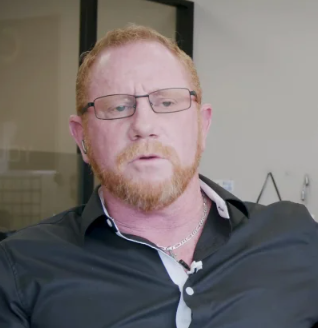
Kerry Irven is the Vice President of New and Used Automotive Operations for Heighton Automotive Group, a family-owned and operated automotive group serving communities across Eastern Ontario. Kerry began his automotive career in new-car sales, building his experience on the showroom floor and working his way through multi-store dealership operations.
With over 25 years in the automotive industry, Kerry has helped grow automotive businesses from one location with 40 to 50 vehicles in stock to more than 500 vehicles across 10 rooftops. His hands-on background in both new and used-vehicle operations gives him a practical understanding of what customers look for when shopping for their next vehicle.
Throughout his career, Kerry has always been actively involved in staff coaching and in understanding customer wants and needs, helping ensure the businesses he works with continue to adapt to what customers are truly looking for.
One of the most exciting chapters of his career has been the shift into modern automotive marketing, embracing new technology, transparent pricing, customer-first inventory strategies, and new ways to create a better vehicle-shopping experience.
Kerry has completed extensive automotive training, including certification through the Ontario Motor Vehicle Industry Council, involvement with the Used Car Dealers Association of Ontario, Canadian automotive dealer training, and multiple customer service courses.
Born and raised on a farm, Kerry has always valued family, hard work, and a practical, down-to-earth approach. Joining Heighton Automotive Group and working alongside Thomas Heighton and family, along with managing partners Kyle Lothian and Martin Gougeon, has allowed him to bring those same values into the car business. It has also allowed Kerry to continue following a simple philosophy: treat every customer exactly the way he would want to be treated.


Comments